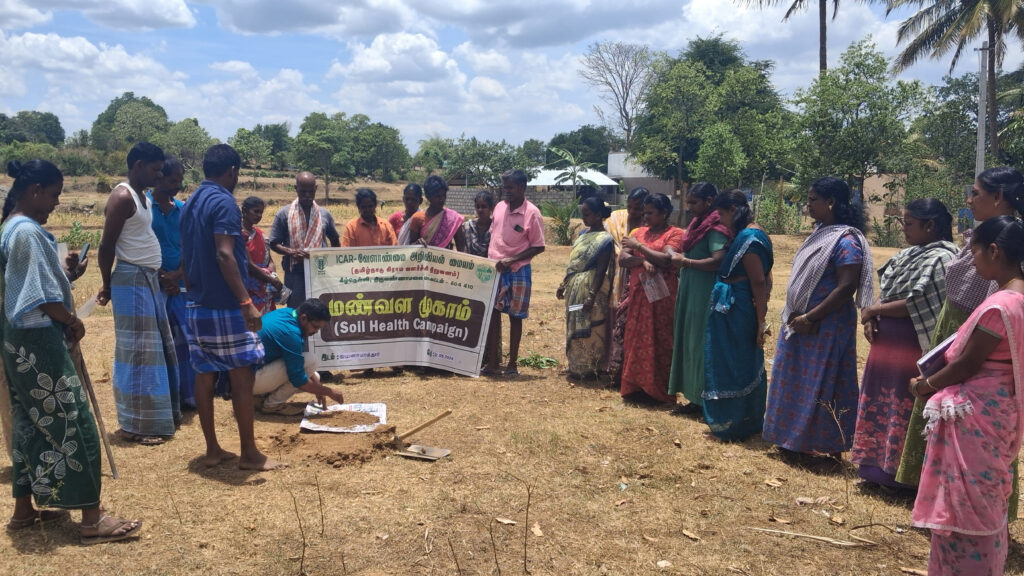
Krishi Vigyan Kendra, Thiruvannamalai, organized a Soil Health Camp at Paradiyur village in Jamunamarathur block on 02.09.2026, particularly for Scheduled Tribe (ST) farmers to create awareness about the importance of soil and water testing. The campaign initiated by Mr. V. Suresh, Senior Scientist and Head, delivered a special address highlighting the importance of soil-test-based fertilizer application for optimizing fertilizer use and reducing input costs. Shri P. Narayanan, SMS (Plant Protection), delivered a lecture on the use of bio-inputs in organic farming to improve soil fertility, along with the role of green manures and vermicomposting in soil health management. Mr. P. Chowthry demonstrated the techniques for soil and water sampling. A total of 23 ST farmers and farm women participated in the programme. In addition, 33 soil samples were collected from farmers in the surrounding villages.
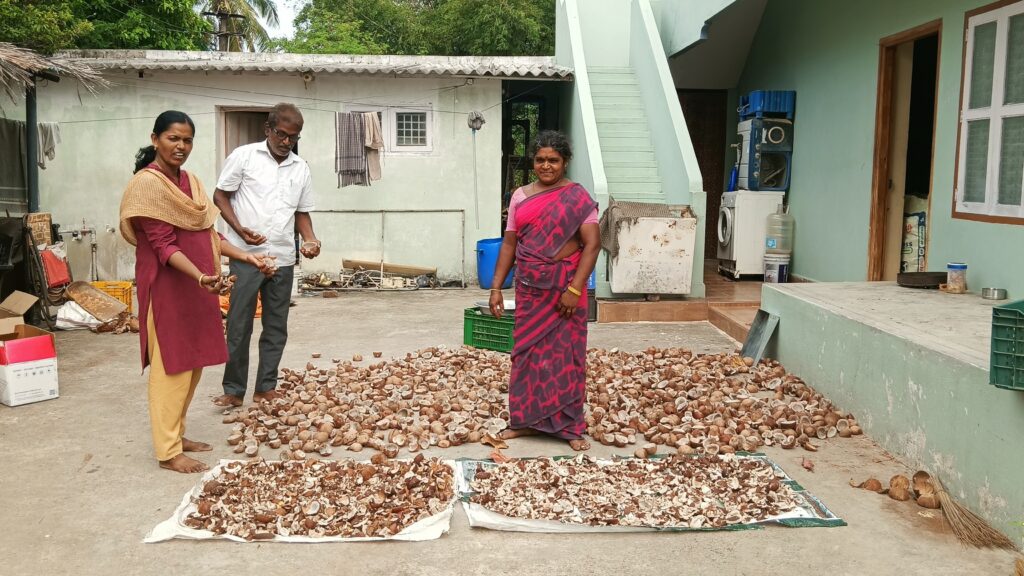
KVK organized an input demonstration at Mattathari village in Arni Block on 14.08.2026 under the SCSP. Mr. V. Suresh, Senior Scientist and Head led the programme and highlighted the various initiatives implemented by KVK to support Scheduled Caste farmers in the district. Mrs. T. Margaret, SMS (Home Science), established Nutri Gardens for 10 SC farm women to improve household nutritional security. During the field visit, she demonstrated the application of fish amino acid spray and other organic inputs along with effective weed management practices. Ten Nutri Garden seed kits were distributed to cultivate vegetables in available household spaces. In addition, 20 litres of fish amino acid and 10 garden tool kits were provided to the farm women. She also demonstrated iddiyappam making machine and Coconut oil extraction process. Overall, 20 Scheduled Caste farm families benefited from the initiative. The participants also received guidance on using organic inputs to promote healthy crop growth.
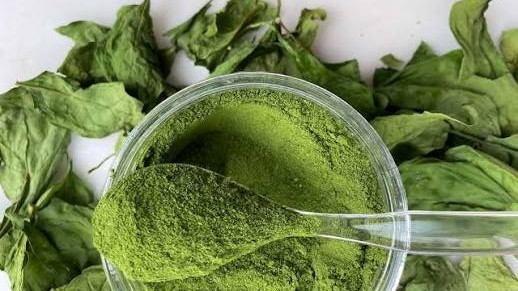
Vegetable cultivation is one of the major livelihood activities in Thiruvannamalai district, where crops such as tomato, brinjal, bhendi, chillies and gourds are widely cultivated. During the peak harvesting season, market arrivals increase substantially, often leading to a sharp decline in prices and post-harvest losses. Value addition provides an effective solution by converting surplus fresh vegetables into shelf-stable, nutritious and marketable products. The district has significant vegetable cultivation, making value addition an important opportunity for farmers and rural entrepreneurs. ICAR–Krishi Vigyan Kendra (KVK), Thiruvannamalai promotes the concept of “On-Season Processing for Off-Season Marketing”. Farmers and Self Help Groups (SHGs) are encouraged to process vegetables during the harvest season into products such as tomato puree, tomato ketchup, dehydrated onion flakes, vegetable powders, mixed vegetable pickles, chilli powder, dehydrated greens and ready-to-cook vegetable mixes. These products have a longer shelf life and can be sold throughout the year when fresh vegetables are scarce and prices are higher. Value addition reduces post-harvest losses, increases farmers’ income, creates rural employment, especially for women and supports entrepreneurship through small-scale food processing units. It also ensures year-round availability of nutritious vegetable products for consumers while strengthening the local food value chain. Similar off-season value chain approaches have been shown to improve farmer income by extending market availability beyond the harvest period. KVK Thiruvannamalai continues to provide hands-on training, technical guidance, entrepreneurship development and market linkage support to farmers, women SHGs and rural youth for establishing sustainable vegetable processing enterprises. By adopting value addition, farmers can transform seasonal abundance into year-round income, contributing to improved livelihoods and a stronger rural economy.
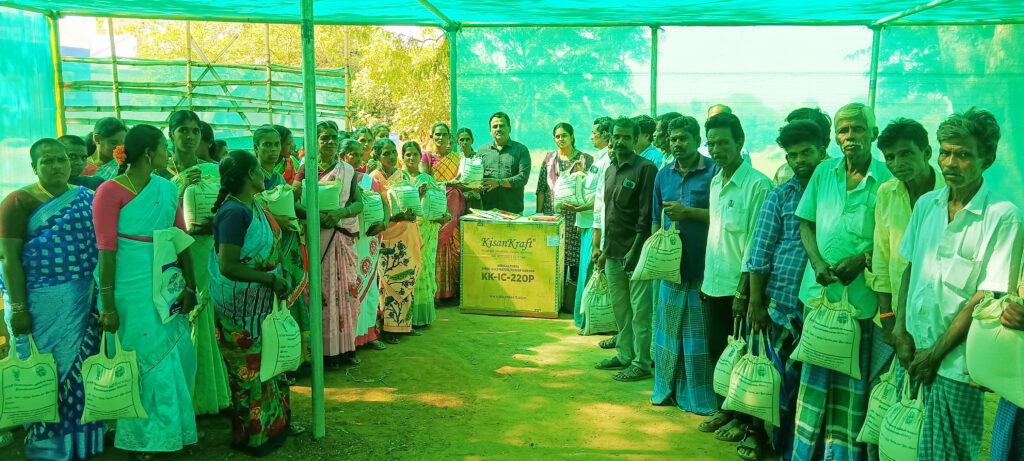
KVK organized an input demonstration event at Jawathu Hills as part of the Tribal Sub Plan (TSP) initiative on 15th July 2026. Mr. V. Suresh, Senior Scientist and Head, presided over the event, providing insights into the schemes implemented by KVK for the benefit of tribal communities. Dr. K. Mayakrishnan, SMS Animal Science, explained about the mineral mixture demonstrated its application for both small and large ruminants, as well as the management of repeat breeding in cows. Mrs. M. Ishwarya, SMS Agronomy, demonstrated cultivation techniques for little millet, finger millet, horsegram, groundnut and paddy. She has provided critical inputs for the demonstration to 100 tribal families to enhance the livelihood security of tribal communities. Mrs. T. Margaret, SMS Home Science, established Nutri Gardens for 50 tribal women to improve household nutritional security. She demonstrated 50 Nutri Garden seed kits containing vegetable seeds to facilitate vegetable cultivation in available household spaces. Additionally, she set up 100 vermicompost production units with 300 Kgs of vermiworms to 50 tribal farmers for quality vermicompost production to assist and promote organic farming practices. A total of 250 tribal families were benefitted out of the above activities.
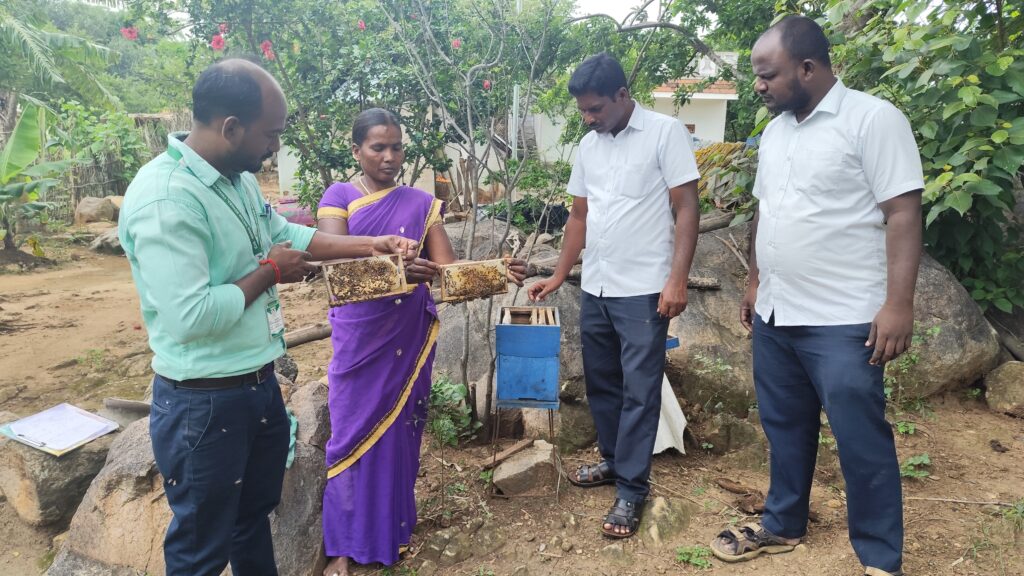
As farmers, you are no strangers to the unpredictable nature of weather, market fluctuations, and rising input costs. Relying solely on traditional crop cultivation can sometimes feel like walking a tightrope. Here at ICAR-Krishi Vigyan Kendra, Thiruvannamalai, our mission is to help you build resilient, highly profitable farming models. One of the most accessible, low-investment, and high-yielding opportunities available today is Honey Bee Rearing. Far from being just a hobby, beekeeping is a powerful tool to generate a steady secondary income while simultaneously boosting your main crop yields. Here is how integrating an apiary into your farm can transform your agricultural economics. Why Honey Bee Rearing? The Dual-Benefit Advantage: Beekeeping is one of the unique agricultural activities where the benefits are twofold. It doesn’t compete with your existing crops for resources; instead, it works in perfect harmony with them. 1. Direct Income from Bee Products While honey is the most obvious product, a well-managed apiary offers multiple revenue streams: Raw Honey: High demand of quality honey in local and urban markets ensures good prices, especially for pure, unadulterated farm honey. Beeswax: Extensively used in cosmetics, pharmaceuticals, and candle-making. Pollen: High demand for its medicinal and Health benefits. Value-Added Products: Processing honey with ingredients like ginger, tulsi, or amla can significantly increase your profit margins. 2. The Invisible Bonus: Enhanced Crop Yields Bees are nature’s finest pollinators. By introducing bee colonies to your farm, you ensure better pollination of your main crops. Yield Boost:Crops like oilseeds (sunflower, mustard), pulses, gourds, drumsticks, and various fruit orchards have a20 to 40% increase in yield, purely due to efficient bee pollination. Quality Improvement: Better pollination leads to uniform fruit set, larger seeds, and better-quality produce, which commands a premium price in the market. How ICAR-KVK Thiruvannamalai Can Help You Success in apiculture requires basic training in hive management, queen rearing, and honey extraction. You do not have to figure it out alone. In this matter KVK Tiruvannamalai involving: Hands-on Training Programs: Learn how to handle boxes, manage pests/diseases, and extract honey safely. Technical Guidance: Get advice on sourcing quality bee colonies and equipment. Exhibitions & Market Linkages: We help connect progressive beekeepers with buyers to ensure you get a fair price for your produce. Sweeten Your Farming Future Today! Diversifying into honey bee rearing is a step toward financial security. It turns your farm into a self-sustaining ecosystem where plants feed the bees, and bees enrich the plants—all while sweetening your bank account. Are you ready to start your beekeeping journey? Reach us at ICAR-KVK Tiruvannamalai campus, or leave a comment below to know when our next training batch begins. Let us work together to bring a “Sweet Revolution” to our district.
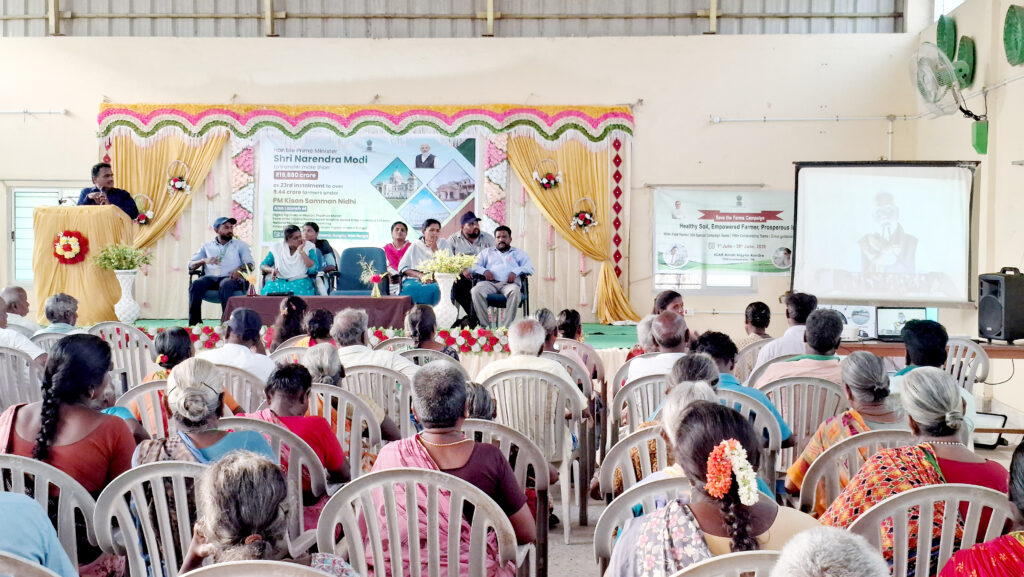
Krishi Vigyan Kendra had organized the Hon’ble PM’s event of Kisan Samman Nidhi live webcast programme at the KVK campus on 20th June 2026 in association with Department of Agriculture and farmers Welfare, Thiruvannamalai. Mr.V.Suresh, Senior Scientist and Head, ICAR KVK Thiruvannamalai presided over the event and gave a special speech on the importance of natural farming, promotion of organic farming and fertilizer management based on soil testing. During the event, the awareness on Khet Bachao Abhiyan, farmers were visited various demonstrations units in KVK instructional farm. Mrs.T.Margaret, SMS Home Science welcomed all the participants attended in the programme. Mr. P.Narayanan, SMS Plant Protection explained about pest and disease management, natural pest repellent preparation method and Mrs.M.Ishwarya, SMS Agronomy narrated about organic and natural farming. Mr.R. Vijayakumar SMS Horticulture briefed the role of natural farming in horticultural crops and the interacted with the farmers and clarified the doubts of the farmers. A progressive farmer Mr. P.Varadhan shared his experience in natural farming among the farmers. A total number 106 farmers from Vembakkam, Cheyyar and Anakavur blocks of Tiruvannamalai district were participated in this program.
Thiruvannamalai has good potential for milk value addition due to the presence of a large dairy farming community, milk cooperative societies and dairy processing infrastructure. Dairy farming is an important source of income for rural households in the district. Opportunities for Milk Value Addition Production of paneer, khoa, ghee, curd, buttermilk, flavoured milk, lassi and milk sweets through women SHGs, FPOs and rural entrepreneurs. Increasing demand from hotels, restaurants, tea shops, hostels and pilgrims visiting Arunachaleswarar Temple. Scope for supplying value-added dairy products to nearby urban markets such as Chennai, Vellore and Tirupattur. Conversion of surplus milk into ghee and skimmed milk powder helps reduce spoilage and increases shelf life. Growing government focus on agro-processing and value-addition clusters creates opportunities for dairy-based enterprises. Strengths of Thiruvannamalai Conclusion Milk value addition in Thiruvannamalai offers significant opportunities for income generation, employment creation and rural enterprise development. Products such as paneer, ghee, curd, flavoured milk, khoa and traditional milk sweets can provide higher returns than selling raw milk, making dairy value addition a promising venture for SHGs, FPOs and dairy farmers.
Healthy seedlings are the foundation of a successful vegetable garden or commercial farm. Starting your own seedlings offers benefits like access to better varieties, lower costs and healthier plants but it requires careful attention to develop. Whether you are a home gardener or a budding entrepreneur, this guide covers the essentials of producing top-quality vegetable transplants. 1. Planning and Seed Selection Before you begin, decide which vegetables you want to grow based on local market demand, climate and season. 2. Choosing the Right Growing Medium Seedlings require a specialized light and well-aerated potting mix. 3. Containers and Sowing 4. Environmental Management For strong and healthy seedlings, you must control their immediate environment. 5. Nutrition and Fertilization Seedlings have specific nutrient needs different from mature plants. 6. Hardening Off and Transplanting Before moving seedlings to the field or greenhouse, they must be “hardened off” to survive outdoor conditions. 7. Integrated Pest Management Monitor your seedlings daily for pests and diseases. Natural Remedies: Use remedies like neem oil or garlic-ginger spray to combat early pests.
Have you ever wondered why commercial gourd farmers get such long, straight and high-quality vegetables? The secret isn’t just seeds-it’s Pandal Cultivation. Instead of leaving vines to creep on the ground, a pandal system (trellis/bower) provides overhead support allowing the fruit to hang. This simple shift from horizontal to vertical farming reduces diseases, improves quality and doubles your harvest. 1. What is Pandal Vegetable Cultivation? A Pandal is a raised structure, often called an arbor or bower built about 6–7 feet high using poles (concrete, iron or bamboo) and wire mesh. The vine vegetables grow upward, trailing across this net-like canopy. 2. Best Crops for Pandal Farming Pandals are ideal for heavy creepers like 3. Key Advantages of Pandal System 4. How to Set Up a Pandal Structure There are two main types: Permanent and Semi-permanent. Steps for Installation: 5. Essential Management Practices 6. Economics and Subsidies While the initial investment for a permanent pandal is high (roughly Rs. 4-5 Lakh/ha) the long-term profits are significant. Government Support: Provides up to 50% subsidy for establishing permanent pandals. 7. Success Story Mr.Varadhan, farmer in Thiruvannamalai increased his net income to Rs. 38,500 per acre by switching to a trellised pandal system from just 7-8 tonnes per acre to 15 tonnes per acre. Conclusion Pandal cultivation is a game-changer for small and marginal farmers looking to maximize their returns. By converting to a vertical system, you can produce premium quality vegetables that fetch a better price in the market.
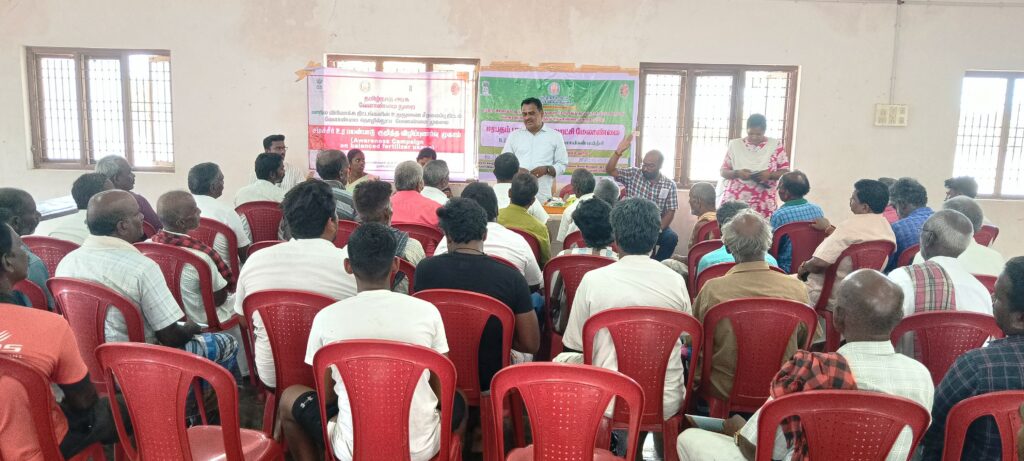
The ICAR-Krishi Vigyan Kendra, Kilnelli, Thiruvannamalai has initiated an awareness campaign on balanced application of fertilizers in collaboration with the Department of Agriculture and ATMA, commencing on 27th April 2026. This program included expert presentations that addressed vital agricultural practices such as appropriate soil sampling techniques, fertilizer application based on soil testing for effective soil health management, cultivation and advantages of green manure and use of green leaf manure for soil enrichment. Moreover, the programme aimed for creating organic inputs and the application of bio-fertilizers, as well as the strategic significance of plant growth regulators and micronutrient mixtures. Demonstrations on soil sampling techniques and actively encouraged the adoption of natural farming practices among the farmers. A total of 421 farmers and farm women participated from 10 blocks viz.,Anakavoor, Chetpet, Cheyyar, Kalasapakkam, Vandavasi, Arni, Kilpennathur, Thandrampet, Thurinjapuram, and Vembakkam.